Monday, 31 December 2012

Apply the media concept of Genre to your film

Apply the media concept of Genre to your film
Genre is style of art.
Our holiday is a teen comedy that fit perfectly with this genre, why.
The comedy we used in very clever because most of the humor is meant to appeal to teenage ranging form 15-19. This is because situation we used in Our Holiday is normal not as funny in real life. An example of this could be the audience is invited to understand Albert’s obsession with girl and how he is able he will be able to over come his nerves to ask Julie out. The audience is able to understand the narrative is deliberately set up to be funny. Therefore when the audience expectation is interpreted this makes our holiday a greater engaging story, such as the introduction of Kel who is introduced when Albert leaves the library.
Character behaviour has an affect on genre. This is shown through the way the characters interacting with each other. Kel is a chilled out sort of character, which makes him act in humorously because of the way he presents himself in audience. He has a very interesting perception of life as his interests revolve around himself, for example eating potato chip can watch television. This is funny because most teenage are most concerned about the social life. Therefore the characters behaviour is key to making the teen comedy successful as all the character express characteristics of the personality that teenage will find most funny.
Outside influences from the society has an impact on the genre as the teenage in our holiday are seen to be trouble makers the older generation. However the genre is on the side of the teenage which aim to prove that they are not as bad as they you think. The society is presented from the point of view of the teenage which makes the opening appeal to young people more that older people, so the film opening has got to be biased in order to work for the teenage. Our holiday shows the society is a place where everyone should work together to achieve the common good. Therefore the society is used as a tool to bring the comedy together, in a way that appeal to a wider target audience.
Furthermore the genre of the opening makes the main characters, which are the teenage group of friend, come across as leaders of the film. The film follows this group of young people through there day to day activities. The audience is encouraged to relate to the event that take place and understand the messages illustrated. An example of this is following Albert’s way to get with Julie.  He is a very brainy individual who has a passion for books, although beauty plus the geek is an equation that our holiday tries to put together. Therefore the characters in our holiday viewed as individual that are just like normal teenagers.
The aims and objective Our Holiday wants to achieve are indicated early on. This is because the opening is meant to hook the viewer as soon as possible as well as making the audience build up an idea of the teenagers in our Holiday. The teenage comedy has been forced to change over the year, because of the way in which teenage go about dealing with there troubles. However the concepts are still the same, such as the concept of love and friendship.  So the genre Our Holiday represents is very relatable to those who are the current teenagers today.
In conclusion the genre of Our Holiday is teenage comedy, as well as meeting audience expectations equals to the views pleasure. The function of language offers a set of rules and a vocabulary with which to organize the meaning of the story. The relationship between the film and the audience is strong which will reduce the risk of financial failure. Our Holiday is used to offer comforting reassurance and a closing down of the complexities of life, which makes the target audience increasingly able to understand the return to Our Holiday’s equilibrium. The characteristics Our holiday represent are recognized by audience over time, such as the mise en scene and themes.

Friday, 28 December 2012

CAMERA STUFF

Camera stuff for opening; MightyMedia12! GREAT news is that the camera has come back, and we have bought some little accessories to shoot our opening with. For those of you who don't know, our film is called The Holiday. It tells the story of 5 friends going on a holiday to Oxford, as they are pretty much broke, however make friends with Oxford locals and sparks a new generation of friendships between two stereotyped regions of the UK. Essex being typically "Working class", and Oxford, "upper class". Now.. I should let you know that the actors are all from Oxford, but they are absolutely fantastic, so you are in for a great film. This film plays on the sterotypes of Age and Class, which are very highly stereotyped in our society, and the moral of this film is to kind of get rid of those sterotypes, and show that relationships can be built, wherever you are from. (Aww isn't that nice!?) Here are some pictures of the equiment we are using: our camera. our dolly. and finally our lighting set

Monday, 17 December 2012

How does text relate to the concept of genre

How does text relate to the concept of genre
Setting and Location. For example, the western is frequently set on a frontier between 'nature' and 'civilisation', with all the associations and recognisable signs of that frontier; the Gothic genre, with its reliance on a location associated with a decaying aristocratic tradition, is very different in setting from the Urban Detective movie, with its setting being cosmopolitan and frequently involving low life. Location is not simply geographical, e.g. 19th century Cornwall or 21st. Century planetary colonies!

Characterisation. Included here are factors such as the complexity, status, function of characters, the reliance on stereotypes, and the emphasis on particular aspects of the lives of those characters - professional, sexual, moral, psychological, or social. Questions of characterisation are inextricably linked with those of plot, e.g. Which came first, plot or characters? Does the plot "generate" the characters, or does it work the other way round?

Plot and Structure. Genre influences the basis, development and terms of explication and resolution of the plot - e.g. the Thriller is concerned with questions of social disorder and its restoration, the detective thriller with the detection and punishment of criminality, the Romantic text with the attainment or otherwise of the desired object or person. The basic point underlying this is that narratives are structured on the principle of disorder, transgression or disequilibrium; the nature of the genre influences the ways in which that disorder (problem) is developed and resolved. Think back to the diagram discussed last week (p.15). Characters serve this basic structural principle, as participants within or functions of this movement from disorder to order. Also involved here: the basis of the reassertion or restoration of order at the end of a text is influenced by the particular genre. For example, moral order restored in the Western, romantic attainment in the Romance (based on a narrative of desire and coveting), and categories of supernatural/other-ness/monstrous in texts concerned with the supernatural. The detective thriller, however, will generally resolve through a rational and secular form of explanation or resolution.

Themes and Concerns. With (3) above comes the tendency of particular genres to be concerned with exploring or resolving certain issues or themes. For example, the detective genre is preoccupied with questions of law and social order, criminality, property ownership, justice and legality; romantic films and fiction with moral and sexual orders, the transfer of property and the 'heir', and also issues of reason vs. passion, normality and abnormality. Horror fiction is concerned with exploring the nature of the 'monstrous' or 'other', the metaphysical order, natural and cultural, the scientific and empirical against the supernatural and unknown.

Pleasures, Expectations and Narrative Address. Each genre generates particular pleasures and expectations in the audience, whether the pleasures are cognitive (problem-solving, analytical, informational), or affective (empathy and engagement, vicarious thrilling or escapism). There's also the question of the 'placing' of the desired or 'ideal' viewer/reader, and the way that particular genres create or address particular races, gender or class groups.

Style. This is a more general and amorphous category, but refers to the ways in which a genre influences or directs such features as film technique and the manipulation of the image, the selection of music, the reliance on 'stars' and of the role and style of the director. Within a couple of minutes of watching a film or programme we already have been able to make some sort of conscious judgement about the kind of film or programme we are watching, and we have come to this judgement through being able to pick up on these general 'signs'

Thursday, 29 November 2012

Devising a film production company name and ident

We decided to write down all our suggestion for the company name which we made a decison for by using a selection. The most popular name were selected and we decide to vote for the one we liked best. As a result we decided to use the make Take 5 prductions that we used to create are production ident. We decide to use is name because it's catchy name and it sound unqiue.

Tuesday, 13 November 2012

Music Industry

Active

&

Passive


Active - An active audience is where an audience can participate in a website.

EXAMPLE

YouTube enables an audience to be active because of the ability to upload, share, copy and past the links, comment, like, subscribe etc.

Passive - An passive audience is where the audience observing a media text aren't really involved in the process.

EXAMPLE

When the internet first went live, people weren't able to interact with websites, therefore it being passive, however now, we can interact with the web and edit, and change stuff.

Monday, 5 November 2012

Film Proposal

Film Proposal
The scenario of the film is a low budget film which is based in the UK, using teenage protagonist set in town in Oxford.
Length of the film is under 3mins long
The genre of Our Holiday is teenage comedy, as well as meeting audience expectations equals to the views pleasure. The function of language offers a set of rules and a vocabulary with which to organize the meaning of the story. The relationship between the film and the audience is strong which will reduce the risk of financial failure. Our Holiday is used to offer comforting reassurance and a closing down of the complexities of life, which makes the target audience increasingly able to understand the return to Our Holiday’s equilibrium. The characteristics Our holiday represent are recognized by audience over time, such as the mise en scene and themes.
The target audience for the film is teenage ranging from 16 -19. This is because they can relate to the event that take place more than some outside this age bracket. However older people may be interested to understand the cultural of the youth of today live in, as well as the common problem they overcome.
The story idea has a very simple outlook however the problem they overcome reinforced by comedy it what keep the audience glued to the screen. The film kick of with the group of teenage being introduced one by, as friends who are look for to go on a holiday. They can only afford to go on holiday in the UK because there back grounds are not particularly rich. This has been used as start of there problem as they go to Oxford for the summer. Thing take a turn for the worst and the group feel they are bombarded with bad luck. However the power of friendship gets them through there troubles and the group finds happiness from the experience.
Character description
Aiming for realism is key to the success of Our Holiday, this is shown through the uses of the quality equipment we were able to use which increases the standard of the media product deliberately. The sharp focus of the shot taken for the opening will reflect continuity editing which is very significant for the standard of the sequence indication.
Designs the main designs we focused on was the production company logo and the credit within the opening. The logo is very simplistic with little detail take to form it. This because we want the logo remembered without over advertising to the audience. The credits are place cleverly with in the sequence with current to reinforce the youthfulness of the film as media product.
I feel there is a gap within the market as there are elements of the film opening which will make it stand out from the rest. All the main character within the film opening are young which shows that as a comedy Our Holiday could relate to other media products that already exist,  such as the Inbetweeners .

Friday, 26 October 2012

Monday, 15 October 2012

Timeline for introduction for a film


Timeline for introduction for a film


This is a timeline for a tiltle sequence on the film crave.

Crave
This is a very interesting film opening with dynamic feature to make it unique d appealing. Crave’s film opening would appeal to those who are interested in watching sophisticated narrative which has a lot of meaning. The credits used in the opening have been cleverly present in a way that the text is clear but not to loud. This is shown through the dark colour of the text that matches with the back ground. The narrative used credits that have similar duration time, which goes well with the movement of the mechanism. The sound track starts from o seconds and fades out on 1.53 seconds, with sounds that are increasingly mysterious.


Wednesday, 10 October 2012

The Prelimary Video Feedback

So we have fininshed the task and I'm going to talk about prcoess of filming.

General I had thought our prelimary task was very successful. We illustated the various shots in the genre of criminolgy.

Strenghts of video
  • The effect of the using extra effects
  • The high quality editing
  • The Edting of video
  • Sound track choice

Problems of video
  • Ideas for plot
  • Creating the best mystrious and cripy character to follow  the girl

How we could improve our video

  • Adding special effects
  • Experiementing with different sounds
  • Researching the genre of the video to come up with better idea
  • Using time more effieient so we can come out even better out come

Friday, 5 October 2012

The Prelimary Production Task

Scenario

The scenrio for the film is a girl being followed by a man who is wearing a scray mask with dark clothing. The girl is unaware of the man following her until he sneakes up and grabs her. The man leaves the audince thinking she is dead, increasinf the criminal element.

Location

The location of the task is set in a school. We filmed inside a dark corridor using a flash light to add extra effect. We also film outside the buillding to add more variety to the setting.

Story board

The is the story board we used to plan the task. We understood that presenting the prelimary task with a mystrious way would be very interesting to experience with. We all came up with lot s of creatrive ideas that increase the quality of the task at hand.

Shooting Schedule

We found it helpful to plan the shooting schedule as this helped us to organise our task and make adjustments if things went wrong. The shooting schedule is the most effeicient way for planning when achievement can be achienved.

The Prelimary Task


Prelimary Task


Wednesday, 3 October 2012

Continuity editing

Camara Shots
Match On Action

A shot that emphasises continuity of space and time by matching the action of the preceding shot with the continuation of the action. (For example a shot of a door opening after a shot of a close up of a character’s hand turning a door handle).Matching on action refers to film editing and video editing techniques where the editor cuts from one shot to another view that matches the first shot's action. Although the two shots may have actually been shot hours apart from each other, cutting on action gives the impression of continuous time when watching the edited film. By having a subject begin an action in one shot and carry it through to completion in the next, the editor creates a visual bridge, which distracts the viewer from noticing the cut or noticing any slight continuity error between the two shots.
A variant of cutting on action is a cut in which the subject exits the frame in the first shot and then enters the frame in the subsequent shot. The entrance in the second shot must match the screen direction and motive rhythm of the exit in the first shot.


Shot Reverse Shot

Shot reverse shot (or shot/countershot) is a film technique where one character is shown looking at another character (often off-screen), and then the other character is shown looking back at the first character. ...Shot reverse shot (or shot/countershot) is a film technique where one character is shown looking at another character (often off-screen), and then the other character is shown looking back at the first character. Since the characters are shown facing in opposite directions, the viewer assumes that they are looking at each other. Or a shot that views the action from the opposite side of the previous shot, as during a conversation between two actors, giving the effect of looking from one actor to the other.


180 Degrees

In filmmaking, the 180-degree rule is a basic guideline regarding the on-screen spatial relationship between a character and another character or object within a scene. An imaginary line called the axis connects the characters and by keeping the camera on one side of this axis for every shot in the scene, the first character will always be frame right of the second character, who is then always frame left of the first. If the camera passes over the axis, it is called crossing the line or jumping the line.

Thursday, 27 September 2012

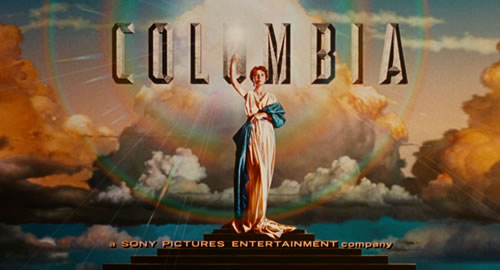
Semiotic analysis of film production logo

Semiotics, or semiology, is the study of signs, symbols, and signification. This study shows us how meaning can be created and the way of seeing the world, and of understanding how the landscape and culture in which we live has a massive impact on all of us unconsciously.


The image uses semiotics because the female is not actually the Statue of Liberty by an actor in the same position as the great statue. This is how film directors, authors and all other media designers of media texts, use Semiotics to place more meaning into 
an object or a SIGN.


Thursday, 20 September 2012

Camera shot Explanations

1)  Extreme Long Shot – This can be taken from as much as a quarter of a mile away, and is generally used as a scene-setting, establishing shot. This type of shot can used as an exterior, for example the outside of a building, or a landscape, and is often used to show scenes of thrilling action. There will be limited detail visible in the shot, as it is meant to give a general impression rather than specific information.      


2) Long Shot – This can considered as the most difficult shot to categorise precisely, however the image shows the approximate life size corresponding to the real distance between the audience and the screen, for example a man would usually appear six feet tall. The Long shot involves full shot showing the entire body, with the feet near the bottom and the head near the top of the frame.  This shot forces on the characters as well as plenty of background detail.


3) Medium Shot – This shot contains a figure from waist up. It is often used in dialogues scenes, or to add detail to the shot. The medium shot also varies from a two shot and three shot, which have more than one person in the shot from the waist up. Usually shots with more than three people in shot becomes a long shot A medium shot has less detail because the location has been established earlier in the scene, so the audience now were the characters are already.


4) Close Up – This shot shows very little of the background, usually a blur, and concentrates on a specific detail of mise en scene or the face. The shot often magnifies the object to show the importance of things such as words written on paper. Close up shots takes us into the mind of the character, so a close up of a face for example, can be a very intimate shot. This show may be used by film makers to make the audience feel increasingly comfortable or uncomfortable, about a character. A zoom lens can be used in most close ups in order to get the correct framing.


5) Crane Shot – This is shot taken from a special device called a crane, which resembles a huge mechanical arm. The crane carries the camera and cameraman, and can move in virtually any direction. This is a useful in the way the camera can move, for example swooping in on action or moving diagonally out. The camera man balanced by the heavy weight and the crane operator must work together to get the most effective outcome. This filming shot is very expensive and is often used by most successful film production companies.


6)      Reaction Shot – This is a shot that cuts away from the main scene in order to show the reaction of  character to it. This shot adds emotion to the scene, which usually comes in between may different shot using cutaway editing. The use for a reaction shot is showing the emotional response on the subject indicated in the scene. This shot can also involve a character paying attention and reacting to what another character is saying. Reaction shots can be especially critical in comedy, as the reaction of an actor or actors to a dramatic incident provides a psychological cue to the audience about how to respond to that incident themselves.


7) Shoulder Shot – This shot is a shot of someone or something from the perspective or camera angel from the shoulder of another person. The shot from the back and head of the person is used to frame the scene of whatever the camera is pointing towards. This shot is very common between two  characters have a discussion, usually following a establishing shot which help the audience to put character in the correct setting.


8)   Extreme Close Up – This shot is the extreme version of a close up shot, usually beyond what humans can see in reality. An extreme close up face, for instance, would show only the mouth or eyes, with no background detail whatsoever. The shot can be seen as an artificial shot, because it uses dramatic effect. The tight focus the shot requires means care should be taken to ensure lighting is will set up. Mistaken must be avoided because a little shake could be noticeable.


9) Dolly Shot – A dolly is a cart which travels along tracks. The camera is mounted on the dolly and records the shot as it moves. Dolly shots have a number of applications and can provide very dramatic footage. This shot is sometimes called a tracking shot. A dolly shot may be a good way of portraying movement, he journey of a character for instance, or for moving from a long shot to a close-up, gradually focusing the audience on a particular object or character. The tracking shot can include smooth movements forward, backward, along the side of the subject, or on a curve.


10)  Master Shot - This shot is a film recording of an entire dramatized scene, from start to finish. The  shot keeps all the characters in view, often a long shot however the master shot  performs a double function as an establishing shot. Usually, the master shot is a wide shot that covers the entire action of a scene as well as being the foundation of camera coverage. When beginning shooting a scene, the master shot is the first shot that is checked off.
 
 
So there are some pretty detailed explanations about the different kinds of shots movie directors would use in TV Drama's or Films.

Tuesday, 18 September 2012

Semiotics


Semiotics “The study of signs and symbols and their use or interpretation”.

Semiotics, or semiology, is the study of signs, symbols, and signification. This study shows us how meaning can be created and the way of seeing the world, and of understanding how the landscape and culture in which we live has a massive impact on all of us unconsciously.

Five reasons for using semiotics:

·         Consistency and clarity of messages

·         Distinctiveness vs. competition

·         Relevance to your target

·         Understand key cultural drivers for consumer behaviour and opinion

·         Future-facing


 Below are some brief definitions of semiotic terms:

Signifier: any material thing that signifies, e.g., words on a page, a facial expression, an image.

Signified: the concept that a signifier refers to.


Together, the signifier and signified make up the


Sign: the smallest unit of meaning. Anything that can be used to communicate (or to tell a lie).


Symbolic (arbitrary) signs: signs where the relation between signifier and signified is purely conventional and culturally specific, e.g., most words.


Iconic signs: signs where the signifier resembles the signified, e.g., a picture.


Indexical Signs: signs where the signifier is caused by the signified, e.g., smoke signifies fire.


Denotation: the most basic or literal meaning of a sign, e.g., the word "rose" signifies a particular kind of flower.


Connotation: the secondary, cultural meanings of signs; or "signifying signs," signs that are used as signifiers for a secondary meaning, e.g., the word "rose" signifies passion.


Metonymy: a kind of connotation where in one sign is substituted for another with which it is closely associated, as in the use of Washington for the United States government or of the sword for military power.


Synecdoche: a kind of connotation in which a part is used for the whole (as hand for sailor).


Collections of related connotations can be bound together either by


Paradigmatic relations: where signs get meaning from their association with other signs,


or by


Syntagmatic relations: where signs get meaning from their sequential order, e.g., grammar or the sequence of events that make up a story.


Myths: a combination of paradigms and syntagms that make up an oft-told story with elaborate cultural associations, e.g., the cowboy myth, the romance myth.


Codes: a combination of semiotic systems, a supersystem, that function as general maps of meaning, belief systems about oneself and others, which imply views and attitudes about how the world is and/or ought to be. Codes are where semiotics and social structure and values connect.


Ideologies: codes that reinforce or are congruent with structures of power. Ideology works largely by creating forms of "common sense," of the taken-for-granted in everyday life.


Sunday, 16 September 2012

Anchorage


Anchorage

Anchorage is fixing of meaning

Anchorage can be added to the narrative for one specific reason. Anchorage can be used to reduce polysemy and, consequently reduce the risk of aberrant readings. For example, a caption can be added to a photo to make the audience interpret the photo in the way that relates to the caption.