Friday, 26 October 2012

Monday, 15 October 2012

Timeline for introduction for a film


Timeline for introduction for a film


This is a timeline for a tiltle sequence on the film crave.

Crave
This is a very interesting film opening with dynamic feature to make it unique d appealing. Crave’s film opening would appeal to those who are interested in watching sophisticated narrative which has a lot of meaning. The credits used in the opening have been cleverly present in a way that the text is clear but not to loud. This is shown through the dark colour of the text that matches with the back ground. The narrative used credits that have similar duration time, which goes well with the movement of the mechanism. The sound track starts from o seconds and fades out on 1.53 seconds, with sounds that are increasingly mysterious.


Wednesday, 10 October 2012

The Prelimary Video Feedback

So we have fininshed the task and I'm going to talk about prcoess of filming.

General I had thought our prelimary task was very successful. We illustated the various shots in the genre of criminolgy.

Strenghts of video
  • The effect of the using extra effects
  • The high quality editing
  • The Edting of video
  • Sound track choice

Problems of video
  • Ideas for plot
  • Creating the best mystrious and cripy character to follow  the girl

How we could improve our video

  • Adding special effects
  • Experiementing with different sounds
  • Researching the genre of the video to come up with better idea
  • Using time more effieient so we can come out even better out come

Friday, 5 October 2012

The Prelimary Production Task

Scenario

The scenrio for the film is a girl being followed by a man who is wearing a scray mask with dark clothing. The girl is unaware of the man following her until he sneakes up and grabs her. The man leaves the audince thinking she is dead, increasinf the criminal element.

Location

The location of the task is set in a school. We filmed inside a dark corridor using a flash light to add extra effect. We also film outside the buillding to add more variety to the setting.

Story board

The is the story board we used to plan the task. We understood that presenting the prelimary task with a mystrious way would be very interesting to experience with. We all came up with lot s of creatrive ideas that increase the quality of the task at hand.

Shooting Schedule

We found it helpful to plan the shooting schedule as this helped us to organise our task and make adjustments if things went wrong. The shooting schedule is the most effeicient way for planning when achievement can be achienved.

The Prelimary Task


Prelimary Task


Wednesday, 3 October 2012

Continuity editing

Camara Shots
Match On Action

A shot that emphasises continuity of space and time by matching the action of the preceding shot with the continuation of the action. (For example a shot of a door opening after a shot of a close up of a character’s hand turning a door handle).Matching on action refers to film editing and video editing techniques where the editor cuts from one shot to another view that matches the first shot's action. Although the two shots may have actually been shot hours apart from each other, cutting on action gives the impression of continuous time when watching the edited film. By having a subject begin an action in one shot and carry it through to completion in the next, the editor creates a visual bridge, which distracts the viewer from noticing the cut or noticing any slight continuity error between the two shots.
A variant of cutting on action is a cut in which the subject exits the frame in the first shot and then enters the frame in the subsequent shot. The entrance in the second shot must match the screen direction and motive rhythm of the exit in the first shot.


Shot Reverse Shot

Shot reverse shot (or shot/countershot) is a film technique where one character is shown looking at another character (often off-screen), and then the other character is shown looking back at the first character. ...Shot reverse shot (or shot/countershot) is a film technique where one character is shown looking at another character (often off-screen), and then the other character is shown looking back at the first character. Since the characters are shown facing in opposite directions, the viewer assumes that they are looking at each other. Or a shot that views the action from the opposite side of the previous shot, as during a conversation between two actors, giving the effect of looking from one actor to the other.
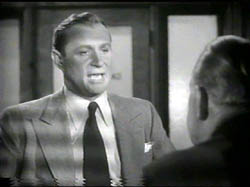


180 Degrees

In filmmaking, the 180-degree rule is a basic guideline regarding the on-screen spatial relationship between a character and another character or object within a scene. An imaginary line called the axis connects the characters and by keeping the camera on one side of this axis for every shot in the scene, the first character will always be frame right of the second character, who is then always frame left of the first. If the camera passes over the axis, it is called crossing the line or jumping the line.