Thursday, 27 September 2012

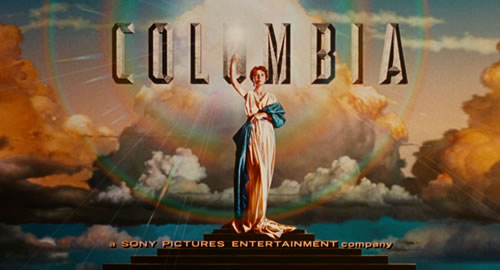
Semiotic analysis of film production logo

Semiotics, or semiology, is the study of signs, symbols, and signification. This study shows us how meaning can be created and the way of seeing the world, and of understanding how the landscape and culture in which we live has a massive impact on all of us unconsciously.


The image uses semiotics because the female is not actually the Statue of Liberty by an actor in the same position as the great statue. This is how film directors, authors and all other media designers of media texts, use Semiotics to place more meaning into 
an object or a SIGN.


Thursday, 20 September 2012

Camera shot Explanations

1)  Extreme Long Shot – This can be taken from as much as a quarter of a mile away, and is generally used as a scene-setting, establishing shot. This type of shot can used as an exterior, for example the outside of a building, or a landscape, and is often used to show scenes of thrilling action. There will be limited detail visible in the shot, as it is meant to give a general impression rather than specific information.      


2) Long Shot – This can considered as the most difficult shot to categorise precisely, however the image shows the approximate life size corresponding to the real distance between the audience and the screen, for example a man would usually appear six feet tall. The Long shot involves full shot showing the entire body, with the feet near the bottom and the head near the top of the frame.  This shot forces on the characters as well as plenty of background detail.


3) Medium Shot – This shot contains a figure from waist up. It is often used in dialogues scenes, or to add detail to the shot. The medium shot also varies from a two shot and three shot, which have more than one person in the shot from the waist up. Usually shots with more than three people in shot becomes a long shot A medium shot has less detail because the location has been established earlier in the scene, so the audience now were the characters are already.


4) Close Up – This shot shows very little of the background, usually a blur, and concentrates on a specific detail of mise en scene or the face. The shot often magnifies the object to show the importance of things such as words written on paper. Close up shots takes us into the mind of the character, so a close up of a face for example, can be a very intimate shot. This show may be used by film makers to make the audience feel increasingly comfortable or uncomfortable, about a character. A zoom lens can be used in most close ups in order to get the correct framing.


5) Crane Shot – This is shot taken from a special device called a crane, which resembles a huge mechanical arm. The crane carries the camera and cameraman, and can move in virtually any direction. This is a useful in the way the camera can move, for example swooping in on action or moving diagonally out. The camera man balanced by the heavy weight and the crane operator must work together to get the most effective outcome. This filming shot is very expensive and is often used by most successful film production companies.


6)      Reaction Shot – This is a shot that cuts away from the main scene in order to show the reaction of  character to it. This shot adds emotion to the scene, which usually comes in between may different shot using cutaway editing. The use for a reaction shot is showing the emotional response on the subject indicated in the scene. This shot can also involve a character paying attention and reacting to what another character is saying. Reaction shots can be especially critical in comedy, as the reaction of an actor or actors to a dramatic incident provides a psychological cue to the audience about how to respond to that incident themselves.


7) Shoulder Shot – This shot is a shot of someone or something from the perspective or camera angel from the shoulder of another person. The shot from the back and head of the person is used to frame the scene of whatever the camera is pointing towards. This shot is very common between two  characters have a discussion, usually following a establishing shot which help the audience to put character in the correct setting.


8)   Extreme Close Up – This shot is the extreme version of a close up shot, usually beyond what humans can see in reality. An extreme close up face, for instance, would show only the mouth or eyes, with no background detail whatsoever. The shot can be seen as an artificial shot, because it uses dramatic effect. The tight focus the shot requires means care should be taken to ensure lighting is will set up. Mistaken must be avoided because a little shake could be noticeable.


9) Dolly Shot – A dolly is a cart which travels along tracks. The camera is mounted on the dolly and records the shot as it moves. Dolly shots have a number of applications and can provide very dramatic footage. This shot is sometimes called a tracking shot. A dolly shot may be a good way of portraying movement, he journey of a character for instance, or for moving from a long shot to a close-up, gradually focusing the audience on a particular object or character. The tracking shot can include smooth movements forward, backward, along the side of the subject, or on a curve.


10)  Master Shot - This shot is a film recording of an entire dramatized scene, from start to finish. The  shot keeps all the characters in view, often a long shot however the master shot  performs a double function as an establishing shot. Usually, the master shot is a wide shot that covers the entire action of a scene as well as being the foundation of camera coverage. When beginning shooting a scene, the master shot is the first shot that is checked off.
 
 
So there are some pretty detailed explanations about the different kinds of shots movie directors would use in TV Drama's or Films.

Tuesday, 18 September 2012

Semiotics


Semiotics “The study of signs and symbols and their use or interpretation”.

Semiotics, or semiology, is the study of signs, symbols, and signification. This study shows us how meaning can be created and the way of seeing the world, and of understanding how the landscape and culture in which we live has a massive impact on all of us unconsciously.

Five reasons for using semiotics:

·         Consistency and clarity of messages

·         Distinctiveness vs. competition

·         Relevance to your target

·         Understand key cultural drivers for consumer behaviour and opinion

·         Future-facing


 Below are some brief definitions of semiotic terms:

Signifier: any material thing that signifies, e.g., words on a page, a facial expression, an image.

Signified: the concept that a signifier refers to.


Together, the signifier and signified make up the


Sign: the smallest unit of meaning. Anything that can be used to communicate (or to tell a lie).


Symbolic (arbitrary) signs: signs where the relation between signifier and signified is purely conventional and culturally specific, e.g., most words.


Iconic signs: signs where the signifier resembles the signified, e.g., a picture.


Indexical Signs: signs where the signifier is caused by the signified, e.g., smoke signifies fire.


Denotation: the most basic or literal meaning of a sign, e.g., the word "rose" signifies a particular kind of flower.


Connotation: the secondary, cultural meanings of signs; or "signifying signs," signs that are used as signifiers for a secondary meaning, e.g., the word "rose" signifies passion.


Metonymy: a kind of connotation where in one sign is substituted for another with which it is closely associated, as in the use of Washington for the United States government or of the sword for military power.


Synecdoche: a kind of connotation in which a part is used for the whole (as hand for sailor).


Collections of related connotations can be bound together either by


Paradigmatic relations: where signs get meaning from their association with other signs,


or by


Syntagmatic relations: where signs get meaning from their sequential order, e.g., grammar or the sequence of events that make up a story.


Myths: a combination of paradigms and syntagms that make up an oft-told story with elaborate cultural associations, e.g., the cowboy myth, the romance myth.


Codes: a combination of semiotic systems, a supersystem, that function as general maps of meaning, belief systems about oneself and others, which imply views and attitudes about how the world is and/or ought to be. Codes are where semiotics and social structure and values connect.


Ideologies: codes that reinforce or are congruent with structures of power. Ideology works largely by creating forms of "common sense," of the taken-for-granted in everyday life.


Sunday, 16 September 2012

Anchorage


Anchorage

Anchorage is fixing of meaning

Anchorage can be added to the narrative for one specific reason. Anchorage can be used to reduce polysemy and, consequently reduce the risk of aberrant readings. For example, a caption can be added to a photo to make the audience interpret the photo in the way that relates to the caption.